Tag: Welding College





If you’re considering a career in welding, it’s more than likely that you’ll be using the 7018 welding rod for various welding purposes. The type of welding rod used for a project depends on the material being used and the requirements of the job at hand. Welders must consider factors such as corrosion resistance, tensile strength, polarity, weld position, and more. A common type of welding rod is a welding electrode, a coated metal wire composed of materials that are consistent with the metals being welded.
There are many different types of welding electrodes, which come in different levels of coating and different sizes. Here, we’ll take a look at the 7018 arc welding rod, an electrode commonly used by welders for a number of purposes.
An Introduction to the 7018 Welding Rod for Welding College Students
The 7018 welding rod is a consumable electrode rod, and is typically used for welding carbon steel. The iron-based flux compound coating this electrode is characterized by a low hydrogen content, setting the 7018 apart from other welding rods. The 7018’s minimal amount of hydrogen allows for a weld that is both tough and resistant to cracks–making it a great option for a number of projects. When welding, its flux compound vaporizes, keeping moisture, hydrogen and air from contaminating the weld bead.
As those with welding technician training will come to learn, the 7018’s numbers can be used to understand its function, as with any welding rod. In the 7018, the “70” dictates its tensile strength, which is equal to 70,000 lbs per square inch. The third digit, the“1,” denotes the welding positions that the 7018 can be used for. The number 1 means that the 7018 can be used for any welding position. The “8” signals the electrode’s coating type–the kinds of current which can be used, and its penetration. In the 7018, the “8” shows that it’s composed of a low-hydrogen flux compound, which allows for a medium-penetration weld compatible with AC, DCEP, and DC currents.
When Do Welders Use the 7018?
The 7018 has a wide range of applications, making it a popular choice among welders for a number of projects. Not only can it be used in any welding position and with a number of different currents, but it produces a relatively steady arc with a low quantity of splatter. The 7018 is used mostly for structural welding due to the strong and ductile weld it produces, and its versatility qualifies this rod for a number of different applications. In addition to structural projects such as high-rise buildings, dams, and bridges— which benefit from the high degree of strength characteristic of the welds created by the 7018—this electrode can also be used to weld pressure vessels, pipes, boilers, and other powerful equipment.
If You’re in Welding Technician Training, Here’s How to Use the 7018
When welding with the 7018 electrode, it’s important to follow a few requirements. First, welding students should make sure to use the correct welding amperage. The right amperage depends on the diameter of the rod in use, which is determined by the thickness of the steel being welded. When using a 7018 welding rod, the welding pro should keep in mind that the strength of these welds tends to make them solidify more rapidly. This welding rod is a consumable electrode–meaning it gets shorter throughout the welding process. Thus, welders should be careful to continuously keep a consistent distance between the electrode’s tip and the metal while concentrating heat at the joint of the weld. The 7018 should be dragged along the metal to ensure that the filler material is secure. With experience, welders will be able to feel when the weld is firmly fixed.
Learning how to use the 7018 takes some practice, relying upon the level of knowledge that can be gained from the right type of welding college program. The North American Trade Schools’ welding program allows students to gain the hands-on training necessary to become skilled experts in the industry. For Welding Graduate Emily Harrison, her “favourite thing about the campus was the knowledge of the teachers and how much practical work you were able to do. It was very helpful.”
Are you ready to learn from the best?
Explore welding classes at NATS today!
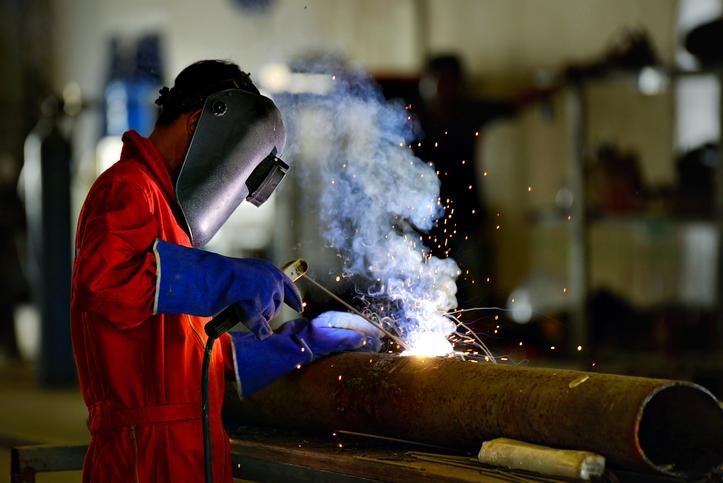 Welding, while a safe profession when the correct precautions are taken, involves many risks and hazards. Welders can work with high temperatures, gases and fumes, electrical voltage, sparks, and ultraviolet rays. In order to protect themselves against explosions, burns, fumes, eye damage, and more, welders must ensure that they are following safety best practices. If you’re thinking about becoming a welding operator, make sure that you’re aware of these safety tips in order to ensure that you’re always staying safe on the job.
Those with a Welding Career Should Stick to a Routine–Before, During, and After a Welding Job
Before beginning any welding job, it’s important to cover all your bases to ensure that the area you’re working in is as safe as possible. Welding operators should always review their operating manual, which contains all the safety information and regulations provided by the manufacturer.
Make a list or mental note of things to check for before, during, and after your welding project. If you’re in a welding career, check for any hazards before beginning your project, such as flammable materials nearby. Make sure to check the equipment you’re working with. Is it functioning properly? Could you injure yourself accidentally on nearby equipment? Do you know where everything is for easy access? During your project, stay mindful of surfaces or surrounding materials that could be hot and should be avoided. After you’ve finished the job, make sure to clean up your workspace. Return all equipment, and ensure that there’s no possibility of a fire occurring.
Wear the Right PPE (Personal Protective Equipment)
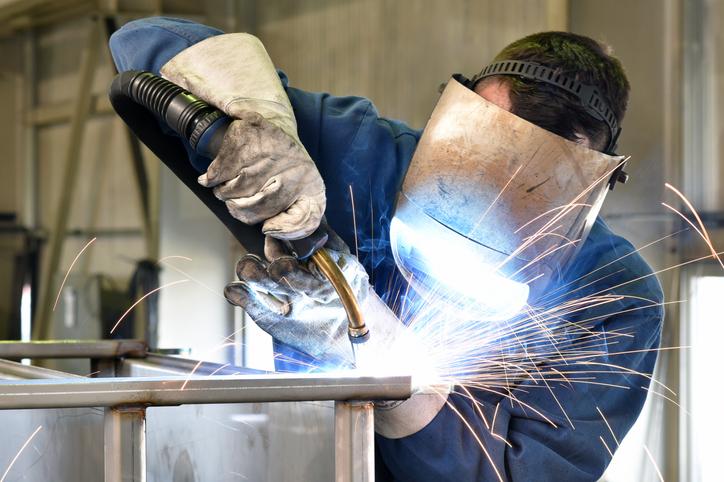
Welders should never begin a project without wearing the right PPE (personal protective equipment). Your PPE will keep you injury-free and protect you from burns, vibrations, and exposure to ultraviolet rays. Your PPE should consist of cotton clothing treated with flame-resistant properties. Wear leather boots that cover your ankles, and never roll up your sleeves or cuffs or unbutton your shirt, which can allow skin to become exposed to sparks or enable sparks to catch in cuffs or pockets, where they can burn. When welding, always wear safety glasses with side shields to protect your eyes from debris and sparks, and always wear protective gloves. Wear a helmet equipped with the proper shade lens for your project to prevent exposure to arc rays, which can cause painful injury to eyes and skin.
Ensure You’re Using Proper Ventilation
If you’ve attended welding school, you’ll understand the dangers of overexposure to welding fumes. In order to avoid this, make sure that your workspace is equipped with proper ventilation systems to remove fumes and gases from the breathing zone. Adequate ventilation will depend on the type of base metal and rod you’re using during your welding project, as these contain different levels of metal oxide compounds. It’s likely that your employer will provide a ventilation system, but make sure to wear a respirator unless you’re sure that exposure levels are below safety limits.
Take Precautions to Prevent Fires
Welding arcs can pose a lot of danger due to the intense heat and sparks they create. Make sure you remove all flammable materials from your work environment or cover them with a fire resistant material before beginning. Check to make sure you know where the fire extinguishers and alarms are located, check that they are functioning, and identify the fire exit nearest to you. If welding near flammable materials, have someone keep an eye on the sparks. Always stay in a work area for at least 30 minutes after finishing a project to ensure that the sparks created will not start a fire.
Stay Dry to Prevent Electric Shock
Welders should take great precautions to ensure that electric shock doesn’t occur, as shock can result in injury or death in serious cases. Electric shock can occur by contact with an electric circuit, which commonly occurs when two metal objects that have voltage between them are touched, or when secondary shock is experienced from a welding circuit. Always inspect electrode holders for damage before starting a project, checking that they are properly insulated, which ensures that the welder will not touch the hot parts within the electrode holder. Be sure to wear gloves and PPE that is completely dry when handling electrodes or electrode holders.
Are you interested in attending welding college?
Check out the North American Trade School’s program options for future welders.